
The book We Come in Peace: War Veterans in Peacebuilding and the accompanying photography exhibition were presented on Wednesday, 20 May 2026 at the Bihać City Gallery.
Taking part in a discussion about the book were Franjo Grgić (Bihać), Jasmin Osmankić – Strikan (Bihać), Veroljub Smiljković (Kruševac) and Nenad Vukosavljević (Belgrade). Dalila Vojniković Dupanović was the moderator.
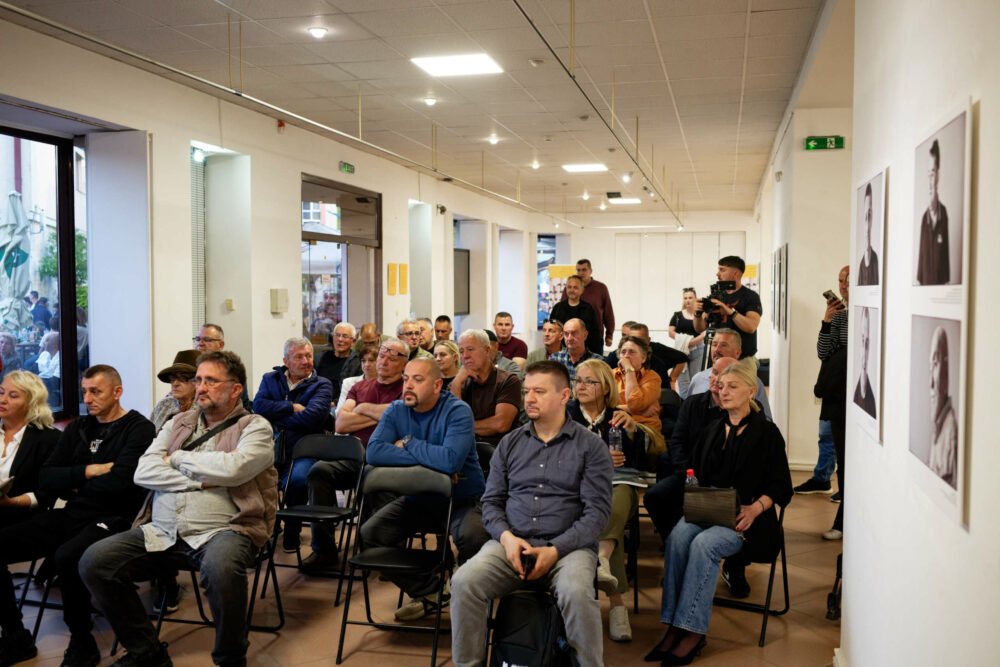
Alongside the book promotion, an accompanying exhibition of photographs by Nenad Vukosavljević was also opened. The exhibition will be on display for visitors at the Bihać City Gallery until Sunday, 24 May 2026.
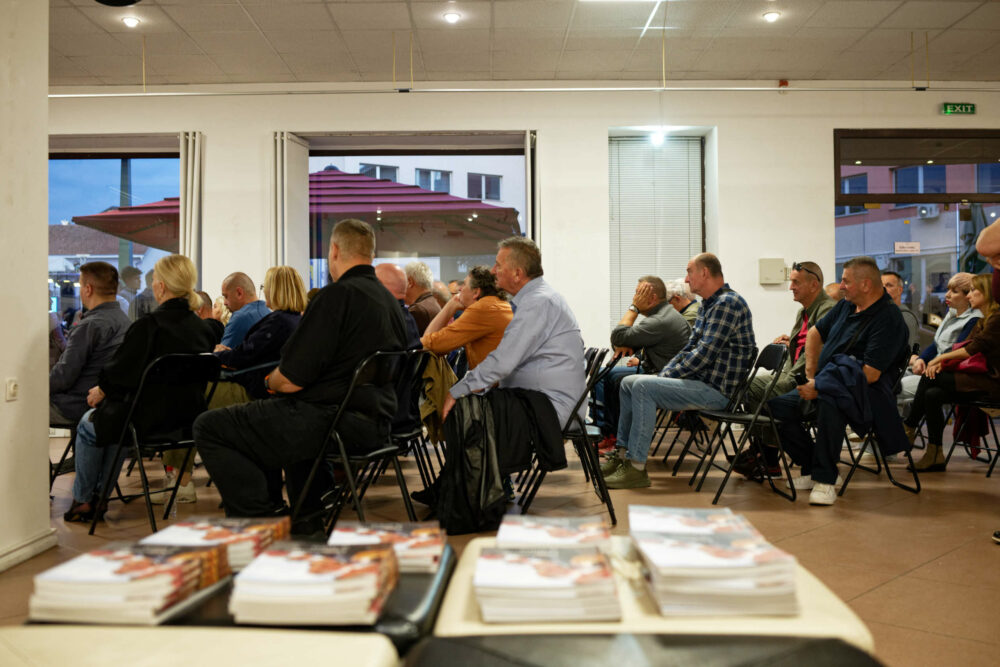
As moderator, Dalila Vojniković Dupanović introduced the book and the discussion participants, and shared a few personal reflections:
“I was born in 1991. When the war started, I was not yet two years old. My father, two uncles and a cousin were killed in the war. My mother, my two sisters and I became refugees and we never returned to our hometown of Orašac. Here with me this evening is a man I’m meeting for the first time in my life – Jasmin Osmankić. His brother was killed at Losunski Bridge together with my father and his brothers. I found the remains of my loved ones eleven years later. Jasmin still hasn’t found his brother Irfan. And maybe that is precisely why this book is important to me and why these encounters are important for all of us, because we are all trying to heal and we all need these conversations in order to continue living together. As I was reading it, I realised how all of us are connected with invisible threads, whether we like it or not. I realised how we carry each other through stories, loss and memory, even when we had never met before. I have been working in the media for years, but I must admit I didn’t know enough about stories like this and the people who found the strength to talk to each other after everything they had been through. That is why I find what the Centre for Nonviolent Action is doing truly inspiring. Because peace is not just the absence of war, peace is also the readiness of one human being to turn to another.”
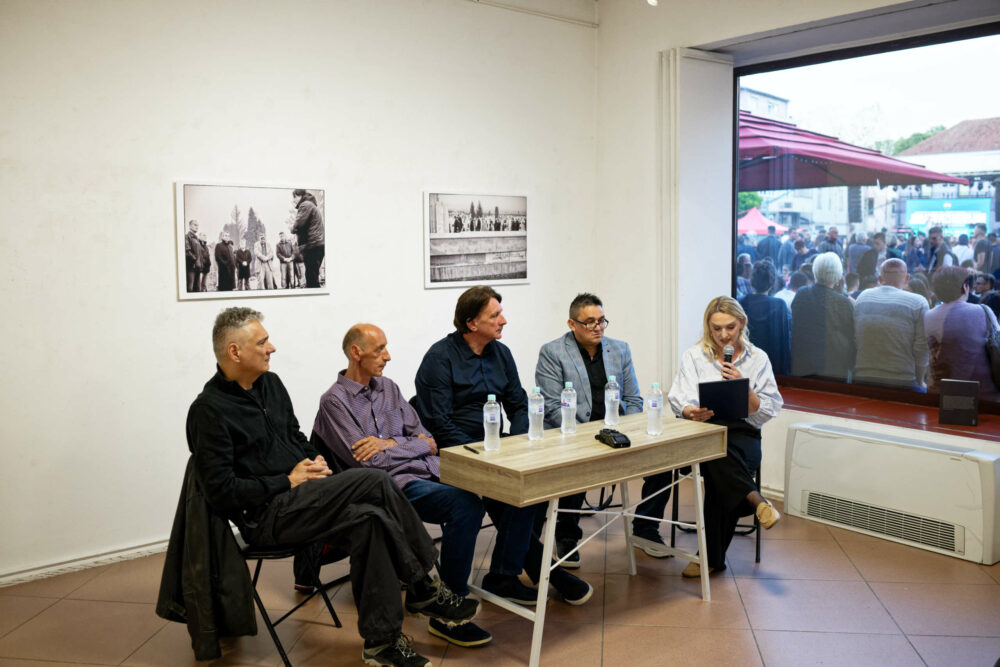
As a young man, Nenad Vukosavljević refused military service and during the war years, he worked with organisations for human rights and refugees. In 1997, he came to Sarajevo and founded the Centre for Nonviolent Action, an organisation that would become one of the most important meeting places for former combatants from different armies and communities. Talking about the initial idea of working with war veterans and the first steps, he said:
“The need to meet the enemy was evident and strong. Besides, some of my colleagues were people who spent the whole war in uniform and it was clear to me that images of the enemy that were dominant among veterans could only be dismantled through encounters with reality, by meeting people face to face so that the terrible enemy on the other side could be recognised as human again. The obstacles we encountered were many, I would highlight the fear of people to talk to each other and the misconception that some people cannot change. The war did not resolve conflicts, it did not deconstruct hostility, it left deeper wounds and scars that made conflict resolution more difficult.”
Franjo Grgić was an HVO commander in Bihać and had a high level of responsibility in the war years. He often talks about the importance of remembering victims, but also the need for society to find a way to move on without hatred and new divisions.
“In order to make sure war never happens again, we tell people how it was, how much suffering there was and how horrific it was. As long as I am able, I will continue working with CNA to show by example that we can go to all the sites where people were killed, that these sites should be properly marked, that we can pay our respects to the victims. It is better to negotiate for 20 days, if need be, than to go to war for 2 minutes.”
Jasmin Osmankić Strikan was born in Kulen Vakuf. He ended up in the war after his family was displaced and he suffered great personal loss. He was a member of the Territorial Defence, wounded several times, he lost his brothers and many loved ones, and survived detention camps. Today, he leads the cantonal association of people suffering with PTSD and he talked about the need for peace and coexistence.
“My aim is to talk to people and maybe also find information about where some of our missing are. But I also want to see what other peoples have been through, not just here in the Bihać area, but further out in other places, and to make sure it never happens again.”
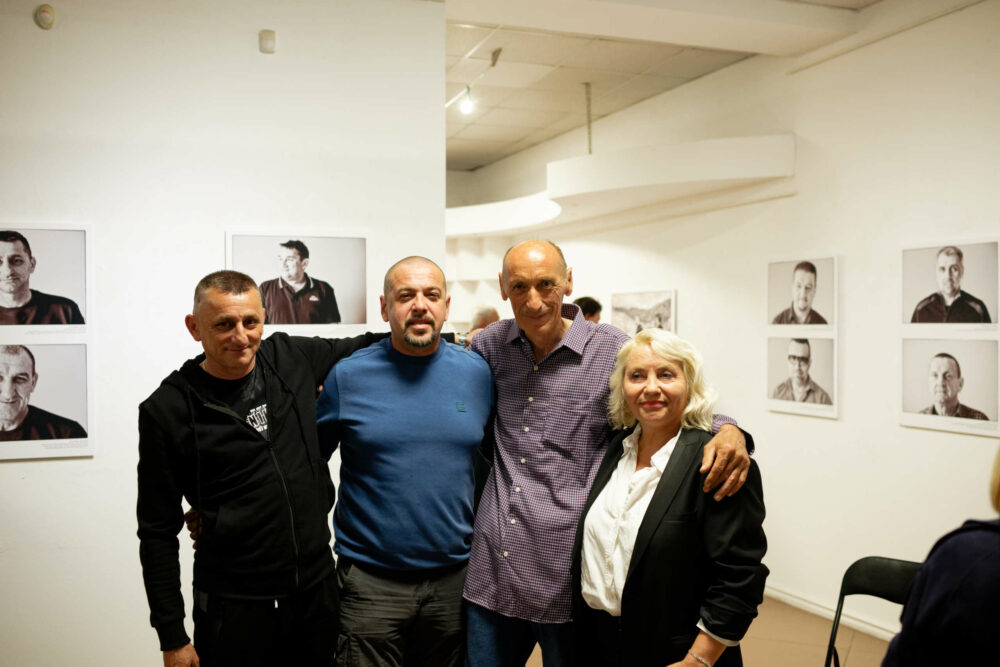
Veroljub Smiljković from Kruševac was seriously wounded as a young man during the war in Kosovo. Today, he is a disabled war veteran and one of the founders of the Peacebuilders organisation that works on connecting people and dealing with the legacy of war. Talking about his motivation to work on peacebuilding, he said:
“The desire to sit with the other side, to understand what happened to us, why and how? There was, of course, fear of that first encounter, of the reactions. But, when you find out that it’s essentially the same story everywhere and that the other side had victims and the same pain and suffering, that is what motivates you. There isn’t just hatred and war, there is also the other side which is actually the same.”
The presented book collects the experiences gained by the Centre for Nonviolent Action over more than twenty years of working with war veterans on peacebuilding and has two parts: one is focused on the potential of war veterans for peacebuilding and the experiences gathered while working with them, and the second part focuses on the people who make this work possible.
The electronic edition of the book can be downloaded for free from our website and print copies are available to visitors in our offices in Sarajevo and Belgrade.