
On Friday, 17 April 2026, a commemoration was held in Sovići and Doljani near Jablanica in memory of the civilians killed and detained at these two sites in 1993. In addition to the prison camp survivors and victims’ families, the commemoration was also attended by war veterans and peace activists from the region.
According to the Jablanica Prison Camp Survivors Association, units of the Croatian Defence Council (HVO) attacked these two villages in the morning hours of 17 April 1993. A total of 507 people were detained in the camps that were set up in these locations from 17 April to 6 May 1993, including women and children, while 107 military-age males were transferred to the camps in Ljubuški. On 21 April 1993, four prisoners were taken from the camp and shot, while eight people initially detained at these sites were later killed in other camps in Herzegovina. The International Criminal Tribunal for the former Yugoslavia (ICTY) described the crimes committed in Sovići and Doljani in detail in its judgements against Jadranko Prlić and others, and in the judgement against Mladen Naletilić Tuta, commander of the “Convicts’ Battalion”. According to these ICTY judgements, the attack on Doljani and Sovići was conducted by the “Mijat Tomić” brigade from Prozor-Rama, the “Convicts’ Battalion” from Široki Brijeg and the “Ludvig Pavlović” unit from Čapljina, as well as other HVO units from the Livno and Posušje area.
The president of the Jablanica Prison Camp Survivors Association Ibro Kukić said in his address at the commemoration that a monument was erected in Sovići last year at the site of the demolished school that was a detention facility and site of execution of the prisoners.
“Building the monument was our duty to remember the innocent victims. This monument is not a monument of hatred towards anyone. Let this memorial serve as a warning to present and future generations to ensure that a crime like this never happens again. The monument will remind us of the horrible truth about the suffering that the prisoners endured,” Kukuć said.
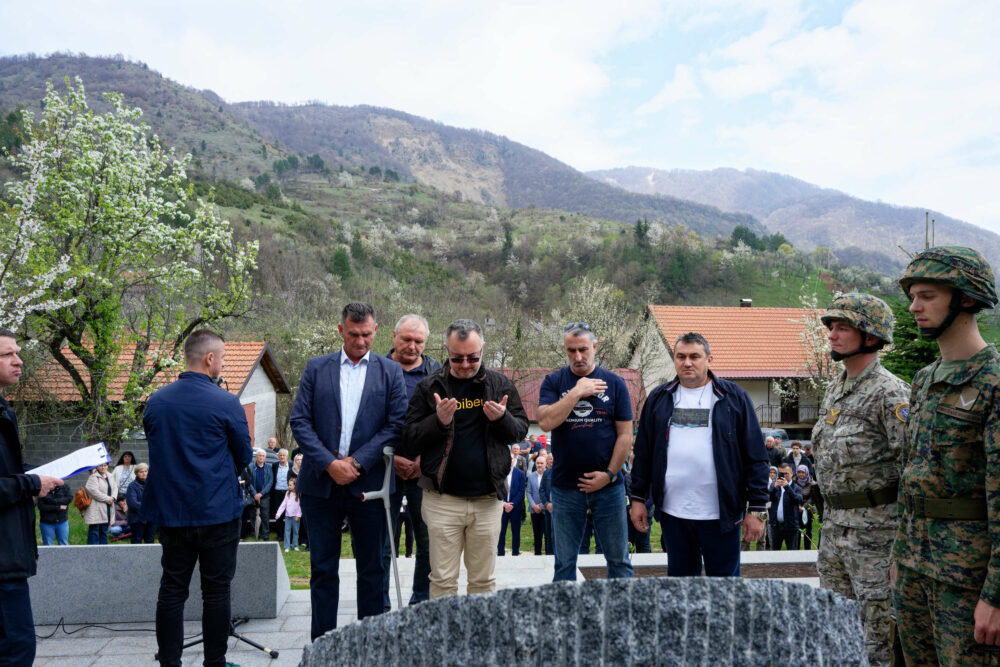
Amer Delić, member of the team from the Centre for Nonviolent Action and an ARBiH war veteran from Zavidovići, said that by coming to places like this war veterans come together to send a message of solidarity with all victims.
“It’s never easy when you hear the personal stories of how people have suffered, but it’s always motivating to see how much coming and offering support means to people. In our experience, it’s particularly significant for people when their suffering is recognised and accepted by members of other groups, when it is shown that solidarity with victims overcomes all divisions. We are very grateful to the people from the Jablanica Prison Camp Survivors Association who invited us to attend. People come here in their own name, we represent exclusively ourselves and we want to show that a human memory is really possible. I was at the commemoration for Croat victims in Uzdol, I went with an equally open heart as I came here today, and then yesterday, we were in Trusina. In the future, I hope to see a society where we will all respect all the victims and establish a level of trust that will guarantee peace for future generations,” Delić said.
Under the organisation of the Centre for Nonviolent Action, peace activists and war veterans from the region have attended commemorations in BiH in Gornji Vakuf, at Site 715 near Zavidovići, in Stog near Vozuća, in Novi Grad/Bosanski Novi, Sanski Most (Hrastova glavica), Sijekovac near Brod, Laništa near Brčko, Trusina near Konjic, Ahmići near Vitez, Grabovica, Uborak and Sutina near Mostar, Briševo and Zecovi near Prijedor, Korićanske stijene, Stupni Do near Vareš, Boderište near Brčko, the bridge over the Sava in Brčko, Bradina near Konjic, Skelani near Srebrenica, the Silo in Tarčin near Hadžići, Lozje near Goražde, Rogatica, and in Serbia in Grdelička klisura near Leskovac, Varvarin near Kruševac, Aleksinac, as well as in Croatia in Pakrac, Varivode and Gošić near Knin.
Ivo Anđelović, an HVO veteran from Brčko, said that despite the sad occasion, he was glad he could attend today’s commemoration.
“We come together to pay our respects to the people who were killed here. We visited so many places together and the feeling is similar, a feeling of sorrow and pain. Only together, looking each other in the eye, can we arrive at the real truth. We need a brighter and better future for all, and we should all work to make it happen,” Anđelović said.