
The book We Come in Peace: War Veterans in Peacebuilding was promoted at the Brčko District of BiH Library on Tuesday, 9 September 2025, followed by the opening of the exhibition of photographs by Nenad Vukosavljević.
Siniša Mijanić (Šamac), Ivo Anđelović (Brčko), Avdija Banda (Brčko) and Nenad Vukosavljević (Belgrade) participated in the discussion about the book moderated by Ernad Osmić (Brčko).
The event was introduced by Lejla Hogić, the director of the Brčko District of BiH Library, who greeted and welcomed everyone.
The moderator was Brčko native Ernad Osmić, a professor and writer, who reflected on how the wars of the 1990s are often talked about in public, but what is frequently missing is the perspective of people who were direct participants and whose experiences can send a message to future generations, saying that it was precisely their voices that we find in the book We Come in Peace: War Veterans in Peacebuilding.
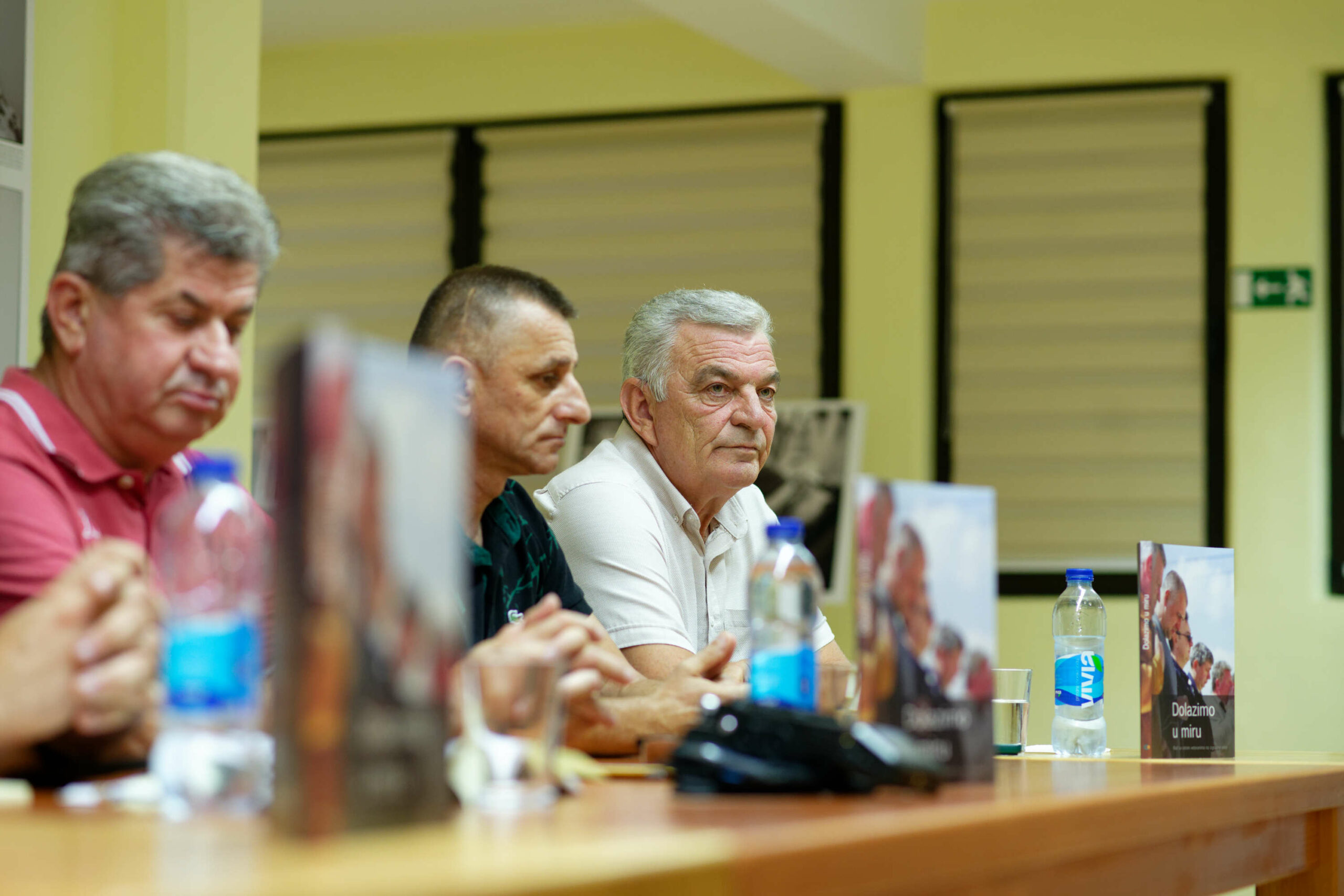
Speaking about more than two decades of working with war veterans in peacebuilding, Nenad Vukosavljević from the Centre for Nonviolent Action pointed out that this organisation does not belong to anyone, that they are mixed in various ways, that they are constantly searching for what our societies need to change in order to ensure that war is never repeated.
Reconciliation is a personal choice and cannot be imposed, we from the Centre for Nonviolent Action started using the word only once the war veterans started uttering it. The book We Come in Peace gives an overview of our work with war veterans and sends the message that if people who used to be enemies, who have suffered so much, are now working together on reconciliation, who can possibly be against it? The truth is that in that work, we won’t always agree about everything, but we have common ground, to make sure that the horrible loss we suffered in the war is never repeated in the future.
Avdija Banda, an ARBiH war veteran from Brčko, pointed out that his generation shares these tragic times, that the warmongering politics had their victims, including himself.
Even now we are being divided by politics. In peace work, we make three steps forward and two steps back, but there’s progress. We must all be more honest, we must build a better society, but if we don’t deal with what happened in the past, it will lead to new wars. During joint visits by war veterans to sites of suffering, I saw genuine compassion for all victims. The turning point for me was when during the visit to Potočari, I saw Novica Kostić, a JNA war veteran from the south of Serbia, shed a tear.
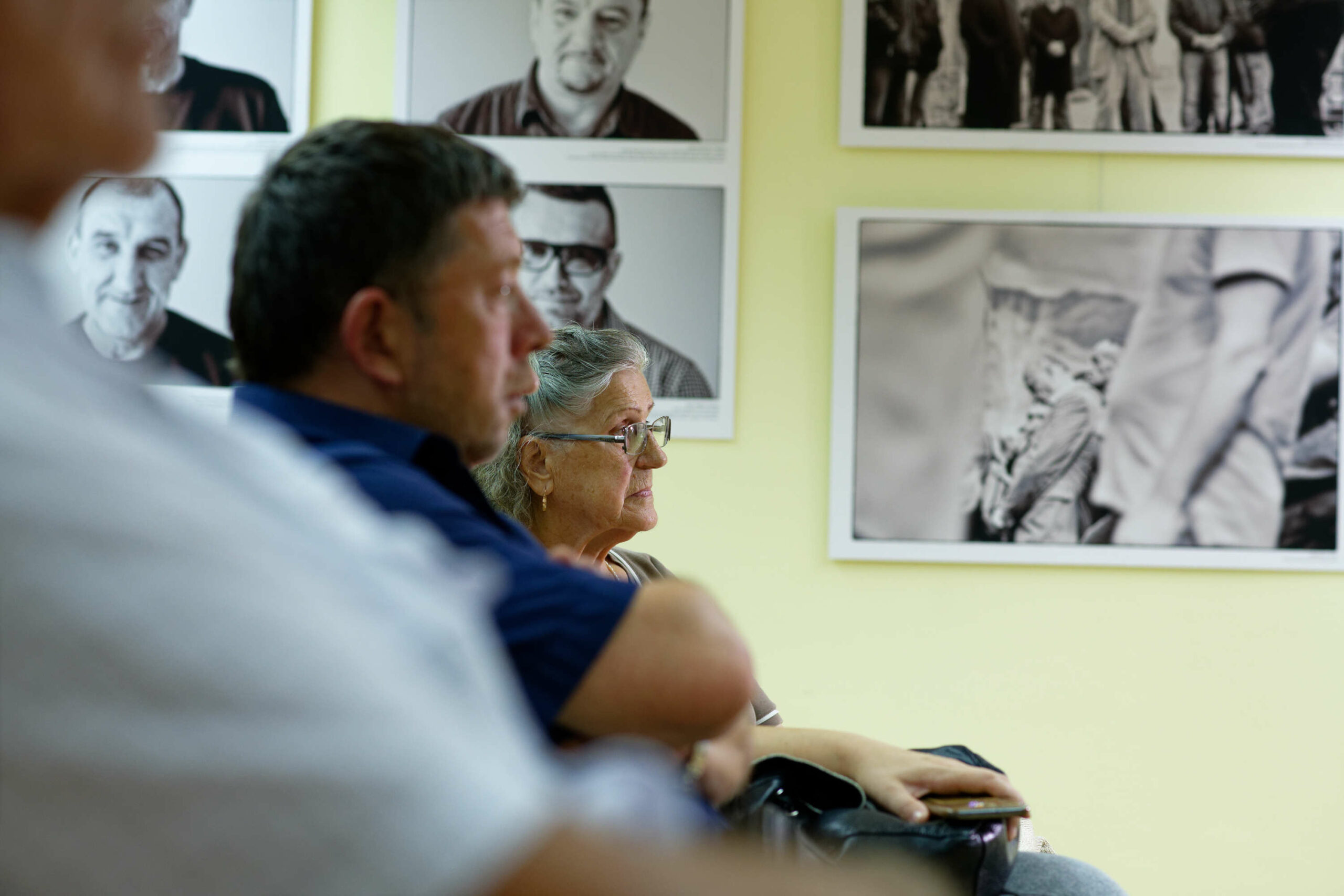
Siniša Mijanić, a war veteran of the Army of Republika Srpska who had just turned 18 when the war started, talked about his engagement in peace activism.
I had different plans for my life, they didn’t include war. My childhood friend and me, we watched each other through cross-hairs, but we met up later and looked each other in the eye. In our joint visits to sites of suffering, there were many difficult moments, but for me it’s always hardest to visit places where children were killed, in Sarajevo for example, or the site in Vitez where eight children were killed. I remember it was raining and I was weeping.
Ivo Anđelović from Brčko, who had been a combatant with HVO during the war, said that even though he took part in many joint visits by war veterans to sites of suffering, and even though a lot has been done in Brčko to memorialise the fallen from all three armies, he regrets that the Brčko District has never managed to hold a joint commemoration for all victims, but instead each side commemorates its victims separately.
Through peace work, I visited various sites of suffering, places where the victims were women, children, the elderly, but I also went to Sijekovac where the victims were Serbs and to Ahmići where the victims were Bosniaks and to Grabovica where the victims were Croats.
Nenad Vukosavljević from the Centre for Nonviolent Action concluded:
I am so very grateful to this group of people who are in the book and in the photographs, because they had the courage to take a step forward, to face up to responsibility and I think that is the path that leads to reconciliation.
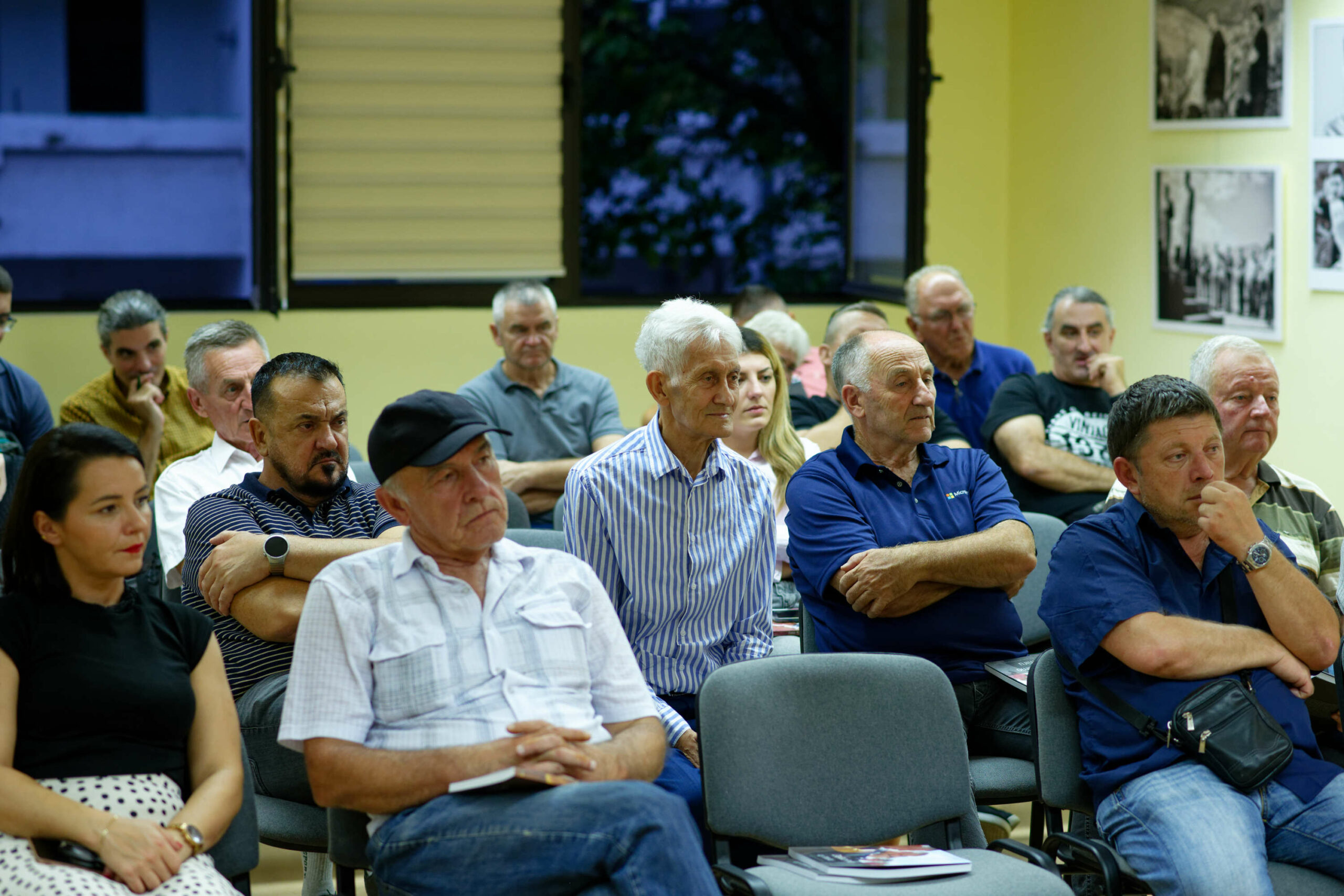
Members of the audience felt safe and supported and decided to share some of their own experiences from the war and the steps taken to normalise life in the years that followed.
The presented book collects the experiences gained by the Centre for Nonviolent Action over more than twenty years of working with war veterans and has two parts: part one is focused on the potential of war veterans for peacebuilding and the experiences gathered in this field, and the part two focuses on the people who make this work possible.
The book chapters were contributed by Amer Delić, Ivana Franović, Nedžad Novalić and Nenad Vukosavljević.
The editors were Ivana Franović, Davorka Turk and Martina Fischer.
The electronic edition of the book can be downloaded for free from our website and print copies are available to visitors in our offices in Sarajevo and Belgrade.
The accompanying photography exhibition will be on display until 16 September 2025. During the first two days after its opening, on 10 and 11 September, staff from the Centre for Nonviolent Action will be on hand to explain the context of the exhibition.