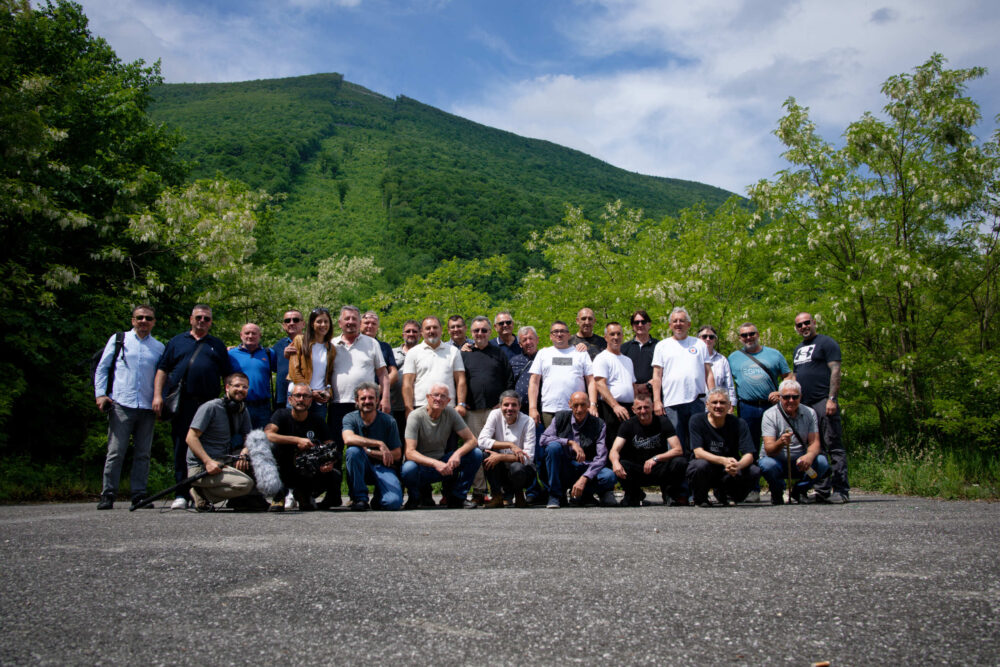
The veterans’ gathering and visit to Bihać, Cazin and Bosanski Petrovac were held from 20 to 24 May 2026.
On Wednesday, 20 May, the Bihać City Gallery hosted the promotion of the book We Come in Peace: War Veterans in Peacebuilding. Dalila Vojniković Dupanović moderated a discussion about the book with Franjo Grgić and Jasmin Osmankić – Strikan from Bihać, Veroljub Smiljković from Kruševac, and Nenad Vukosavljević from Belgrade. The promotion was accompanied by Nenad Vukosavljević’s photo exhibition that was on display until 24 May.
Over the following days, our visit to Krajina included meetings with representatives of local authorities and associations in Bihać, Cazin and Bosanski Petrovac. These encounters confirmed our joint commitment to work on peacebuilding through dialogue. Apart from official meetings, we also visited local memorials and historical sites, paying our respects to the victims from the last war and getting to know more about the socio-historical context of this region. Throughout the trip, we were treated to views of incredibly natural beauty, from the wild emerald rapids of the Una River around Bihać and Kulen Vakuf to the tame green hills of Cazinska krajina.
Cazin
The visit to Cazin began with a working meeting at the City Administration building where the group was received by Jusuf Bajrektarević, the advisor to the Mayor of Cazin, and Smail Toromanović, a representative of veterans from Cazin. The hosts did not hide how impressed they were with the visit, calling it a fascinating event for the city of Cazin itself. They expressed their readiness to join future actions, pointing out that they were supportive of BiH as a state of all its peoples, and that our activities were an example of how people can meet and talk and work together.
After the meeting, we visited some of the local memorials. The group went to see the Ćoralići Primary School where there is a distinctive memorial consisting of a Soviet transport helicopter that was used during the war to carry over 10,000 passengers and 200,000 kilos of cargo and was later installed there in memory of the heroism and contribution of the Bihać Aviation group.
In addition, the veterans visited and laid flowers at the memorial in the Pjanići neighbourhood, an area closely linked to defence efforts of the 5th Corps of the Army of RBiH, as well as the location of the former Cazin airfield.
Bosanski Petrovac
Activities continued in Bosanski Petrovac with an official meeting with Mayor Mahmut Jukić and the president of the Disabled War Veterans Association of the Army of RBiH Ermin Hidić. During the meeting, the hosts expressed their readiness to fully support future projects that, as they said, foster coexistence and further peacebuilding.
Following this official meeting, the delegation paid their respects to the victims of war by laying flowers at the central memorials in the city: the monument to fallen fighters of the Army of RBiH at Trg šehida, and the monument to civilian war victims located near the Health Centre. Continuing the programme, the group also visited a cultural and historical landmark, the Skender Kulenović Memorial House.
The official part of the visit to Bosanski Petrovac concluded with a tour of two memorial sites outside the city centre, both on Petrovačka Road, which already during World War II became a symbol of collective sorrow and suffering. We first visited the memorial dedicated to Bosniak civilians from Sanski Most and Ključ. At this site, convoys of people fleeing war for safe territories were intercepted and brutally attacked during 1992. The group also stopped at the memorial cross on Petrovačka Road in Janjila. Erected to commemorate the 7th of August 1995, this cross testifies to a tragedy that happened during Operation Storm, when ten civilians, including four children, were killed by missiles fired at the refugee column by Croatian air forces.
Kulen Vakuf and Martin Brod
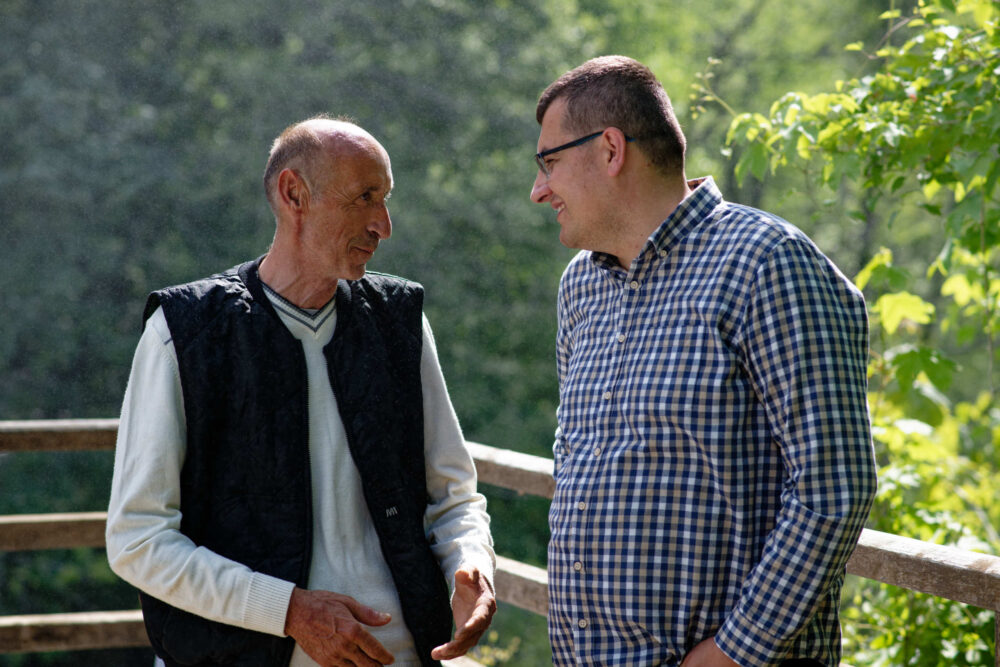
The afternoon was devoted to becoming better acquainted with the tumultuous past of the Ljutočka Valley through visits to Kulen Vakuf and Martin Brod. The participants first visited the Shahid Memorial and Cemetery in Kulen Vakuf which is the central memorial site commemorating the suffering of the Bosniak population of the area during the war (1992–1995). Through the emotional and authentic testimony of Jasmin Osmankić Strikan, a member of the veterans group and a direct participant in these events, the group learned about the ordeals suffered by the people of Ljutočka Valley. His personal experience and memory of expulsion, loss of loved ones and days of defence gave this visit a deep human dimension, highlighting the importance of preserving the memory of civilian victims and defenders of this part of the Bihać Municipality. The group also heard touching testimony from Alen Osmankić, the son of a fallen fighter and Strikan’s brother, who is still searching for the remains of his father and of other missing persons from this area.
The day ended with a visit to Martin Brod, a picturesque town situated at the confluence of the Unac and Una rivers. The group visited the Rmanj Orthodox monastery, a cultural monument from the 15th century which had been destroyed and rebuilt several times through history. It was an ideal place to reflect on the multi-religious heritage and coexistence of peoples that have been sharing this area for centuries.
Bihać
The programme of the visit to Bihać successfully combined three different historical epochs and local cultures of memory, offering the participants deep insight into the refractions of the past in this area.
The tour started with a visit to the Garavice Memorial Park, one of the biggest execution grounds from the Second World War. At this site, in 1941, the Ustashas massacred several thousand civilians, mostly Serbs, Jews and communists. The historian Dino Dupanović gave a detailed overview of the historical context and explained the architectural specificities of the monument by sculptor Bogdan Bogdanović. He particularly focused on the contemporary controversies regarding the abstract style of the sculptures, the writing on the entrance plaque and polemics about the precise number of victims.
After Garavice, the participants went to the Catholic cemetery of Križ in Žegar and laid wreathes in honour of fallen HVO members who died defending the city during the last war.
The programme continued with a tour of the Željava underground air base, a colossal army complex of the former JNA at the border between Bosnia and Herzegovina and Croatia. The host and member of the veterans group Franjo Grgić introduced the participants to the technical aspects of this once most expensive underground facility in SFRY, constructed to withstand a nuclear attack, but which the JNA permanently destroyed with detonations in 1992.
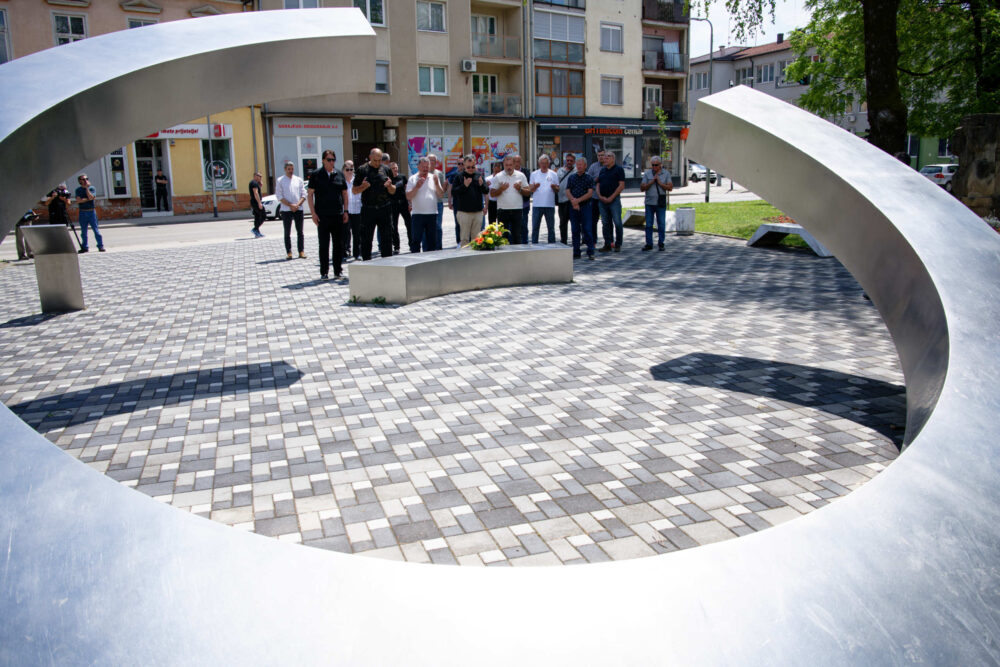
The historical route through various layers of memory in the Bihać Krajina concluded with a visit to the memorial dedicated to the Defenders and Liberators of Bihać in the very centre of the city. Opened in 2020, this contemporary memorial complex is a central site of memory commemorating 1201 days of the heavy siege (1992–1995) of the city of Bihać.
Particularly noteworthy is that we were received by the Advisor to the Mayor of Cazin and the Mayor of Bosanski Petrovac, and that we were given support by the Mayor of Bihać, which is an important step in gaining institutional legitimacy for reconciliation, deconstructing inter-ethnic taboos and building a lasting peace. In societies still labouring under post-war divisions, war veterans possess strong social authority. When mayors receive, welcome and support a mixed group of war veterans, they transform the veteran population from a perceived obstacle to peace into key actors of stability and further peacebuilding. These meetings often open doors to joint visits to sites of suffering and honouring of victims, thereby resisting selective empathy and selective memorialisation.
The group was made up of 25 peace activists and war veterans from Serbia, Croatia and Bosnia and Herzegovina. During the workshops, the participants jointly planned activities for the period to the end of 2026 and through the whole of 2027. Special encouragement and motivation were provided by invitations from the veterans themselves to visit their local communities. They expressed wholehearted readiness to participate in future programmes and commemorations and to act as hosts and provide support in in the implementation of future plans.
We would like to express our gratitude to Franjo Grgić and Jasmin Osmankić Strikan for their exceptional hospitality and logistical support. Their selfless efforts and dedication held strong throughout the group’s visit to the Una Sana Canton.